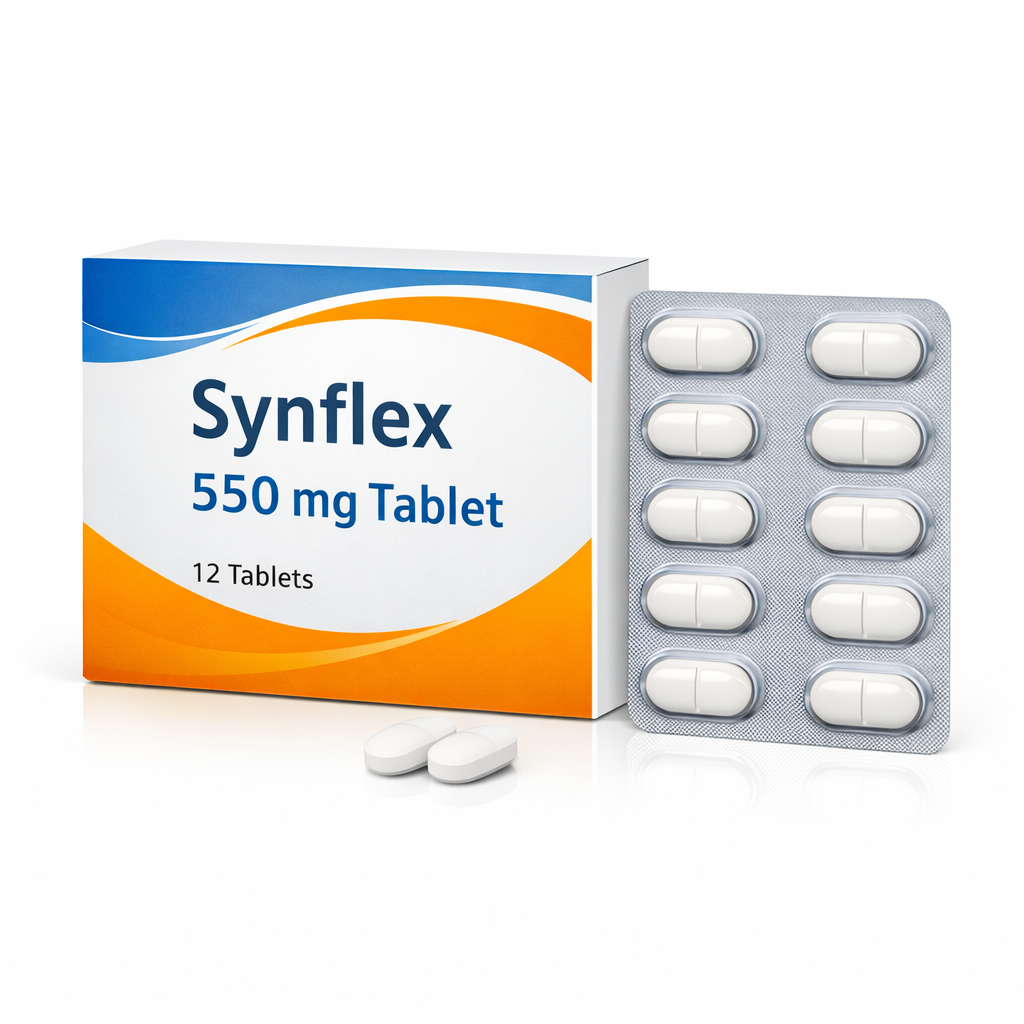
Pain and inflammation are common problems that can affect daily life, whether caused by injury, arthritis, or muscle strain. One commonly prescribed medicine for managing these conditions is Synflex tablet. This blog explains what Synflex is, how it works, its uses, possible side effects, and important precautions you should know.
What Is Synflex Tablet?
Synflex is a non-steroidal anti-inflammatory drug (NSAID). It is commonly used to reduce pain, swelling, and inflammation. Doctors often prescribe Synflex for conditions involving joint pain, muscle pain, and inflammatory disorders.
Synflex works by blocking certain chemicals in the body (prostaglandins) that cause pain and inflammation.
Uses of Synflex Tablet
Synflex tablet is commonly used for the treatment of:
- Joint pain and inflammation
- Arthritis (including osteoarthritis and rheumatoid arthritis)
- Muscle pain and back pain
- Sprains and sports injuries
- Post-surgical pain
- Menstrual pain (in some cases)
It helps improve mobility and reduces discomfort, allowing patients to return to normal activities.
Benefits of Synflex
Some key benefits of Synflex tablet include:
- Effective pain relief
- Reduces swelling and stiffness
- Improves joint movement
- Fast action in inflammatory conditions
- Helpful in both acute and chronic pain
Because of these benefits, Synflex is widely prescribed by doctors for pain management.
How to Take Synflex Tablet
Synflex should always be taken according to a doctor’s prescription. It is usually taken with food or after meals to reduce stomach irritation. Do not exceed the recommended dose, and avoid taking it for a longer period than advised.
⚠️ Never self-medicate, especially if you have existing health conditions.
Possible Side Effects
Like all medicines, Synflex may cause side effects in some people. Common side effects include:
- Stomach pain or discomfort
- Nausea or vomiting
- Heartburn
- Dizziness
- Headache
Less common but serious side effects may include:
- Stomach ulcers or bleeding
- Kidney problems
- Increased blood pressure
- Allergic reactions (rash, swelling, difficulty breathing)
If you experience severe or unusual symptoms, seek medical attention immediately.
Precautions and Warnings
Before taking Synflex, inform your doctor if you:
- Have stomach ulcers or digestive problems
- Suffer from kidney, liver, or heart disease
- Have high blood pressure
- Are pregnant or breastfeeding
- Are taking other painkillers or blood-thinning medicines
Avoid alcohol while using Synflex, as it may increase the risk of stomach problems.
Who Should Avoid Synflex?
Synflex may not be suitable for everyone. It should be avoided or used with caution by:
- People with severe heart, kidney, or liver conditions
- Patients with a history of stomach bleeding
- Individuals allergic to NSAIDs
Always consult a healthcare professional before starting the medication
Final Thoughts
Synflex tablet is an effective medication for relieving pain and inflammation when used correctly under medical guidance. While it offers significant benefits, responsible use is essential to avoid side effects and complications. Always follow your doctor’s advice and never take more than the prescribed dose.
If pain persists despite treatment, consult your healthcare provider for further evaluation.